Latest stories – पछिल्ला टिप्पणीहरू

  • The Spillover Effect: from Bihar to Nepal [and the Maoists]

    By Dinesh Wagle
    Wagle Street Journal

    We are waiting for the spillover effect to take hold. China is growing phenomenally. India is following China so very closely. We are tightly sandwiched between them. We are folding our hands and sitting back, hoping that one day the economic progress will spillover from both sides and submerge us. We are hoping to swim. While hoping so we continue to berate both of our neighbors. We call the Chinese the “ex-Maoists who have no idea about democracy and freedom.” We call the Indians “expansionists who have nothing except the Bihari-style democracy.”

    spillover effect
    Kathmandu Post 28.11.10

    The Bihari-style democracy! Turns out the Bihari-style democracy is much better than what we have been told we have—”great achievement of the great People’s War”. In the past four years since the ‘great People’s War with small help from People’s Movement-II’ gave us republicanism we have gotten nothing but instability and inflation. Life has become harder for the man on the street while leaders are engaged in an endless power struggle. Frustration has surpassed the height of Sagarmatha.

    Until recently, Bihar used to represent the worst of India: crime, corruption, insecurity, lack of development and immoral politics. Everything negative. That image of Bihar has changed dramatically in the past five years. And in the meantime, all these negative Bihari traits have crossed over to Nepal. That’s the actual spillover effect taking place. Neither Bihar nor India is to be blamed for that. We are solely responsible for stagnation and the deteriorating situation in our society. What have we done in the past five years when Bihar went through the historic transformation? Okay, we too witnessed historic political changes. We ended a decade long bloody war. We transformed from an autocratic monarchy to a democratic republic. Certainly things to be proud of. But, the question is, is that enough? The answer is a resounding NO. (धेरै…)

  • Connected in Kathmandu: Complaints and Compliments

    By Dinesh Wagle

    Soon after Tihar celebrations were over in Kathmandu last week I was in Thamel with a colleague who was leaving the newspaper for good. As he took his bike to a nearby parking lot I stood a few metres away from the entrance of the Roadhouse Café. I started fiddling with my phone. As soon as I tapped on the email application of the iPhone it caught six WiFi signals in the area.  I was astonished.

    Not in Khan Market or Connaught Place in New Delhi (where I have been living for the past two years) have I received so many signals at once. Not in Paharganj, Delhi’s Thamel, the backpacker’s ghetto. Not in Park Street, Kolkata or Colaba, Mumbai. I am aware that it will be a gross injustice to Kathmandu if I compare it with some of the biggest cities in India. Kathmandu has suffered tremendously at the hands of incompetent, quarrelling and power hungry politicians. The overall politics of Nepal has become so disgusting that Kathmandu, the capital, has no option but to cover its face in shame. Kathmandu is a humiliated city. Humiliated by its politicians and lazy bureaucrats who are unwilling to think out of box. On the other hand, Indian cities have prospered under the stability that the relatively functional democracy provides.

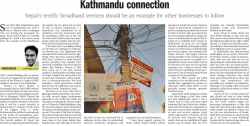
    Kathmandu connection kathmandu post 14 Nov 2010
    Kathmandu Post. 14/11/010

    A few days later I was pillion riding on the bike of a colleague in Tinkune. He showed me a few signboards that advertised WiFi connections. One signboard read: “You have entered Subisu WiFi zone.” (Subisu is a cable Internet service provider.) One couldn’t have expected availability of such services in places like Tinkune until recently. Dozens of ISPs have come up in the past several months in Kathmandu and other parts of Nepal. Despite the bad politics the country has witnessed a silent revolution in telecommunication. We have installed a third generation mobile phone tower on a hill that is not very far from the Everest. Thank you, Ncell. (धेरै…)

  • Two Years in Delhi, India

    SpiceJet at kathmandu airport
    A plane belonging to the Indian budget airline Spicejet at Tribhuvan International Airport in Kathmandu. Landing at the TIA was smooth. The change in temperature (from IGI Delhi

    Two years ago today (Nov 6) I left Kathmandu for Delhi. It wasn’t planned but here I am, today, back in Kathmandu from Delhi. I am in a hurry now- have to go to play deusi– so I am not writing a detailed entry like I did last year about my life, time and observations in Delhi and around India. I plan to extend this entry sometime in the middle of this month when I return to Delhi. Happy Tihar to all.

    Related posts:

    1. A Year in Delhi, India
    2. Dinesh Wagle Has Moved to New Delhi, India

  • Kids of Dadeldhura on the Dashain Tika Day

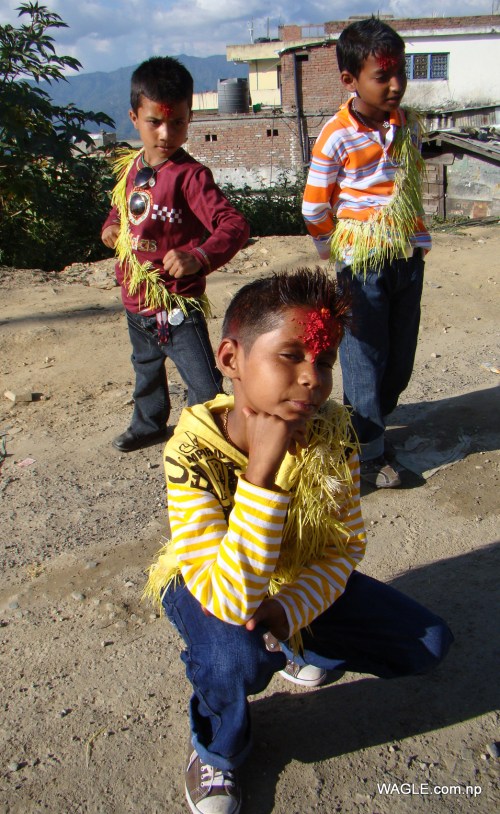
    kids of dadeldhura nepal on the day of dashain tika
    Rockstars of Dadeldhura: This pose too was their idea, I just clicked.

    I was in Dadeldhura on the day of Tika this Dashain. The small bazaar on the hill was closed as people were busy celebrating the festival. I had to spend my Tika day on the hill because I was stuck there. The road was empty. I waited for a day for the buses to ply so that I could move to the next destination. To kill time and my curiosity about the way people celebrate Dashain I wandered around the the almost deserted bazaar. A few people, with tika on their forehead and jamara clipped to their ears, were walking on the street. I presumed that they were moving towards their relatives’ homes. Some men wore beautiful garlands of jamara. That was a new sight to me. We don’t do that in the east. Later a friend of mine in Dadeldhura told me that only so called tallo jaat (lower caste) people, especially damai wear jamara garlands on the Tika day. I am not sure if that’s the truth but it was definitely a new sight to me. I liked the idea. I thought about large families. They need to grow a lot of jamara to get enough garlands for each member of the family.

    Related Entries on Kids:

    1. Time For Kids To Go Back To School (After Dashain Holiday)

    2. The Highway Kids #Nepal

  • The Mahakali Bridge on Nepal-India Border

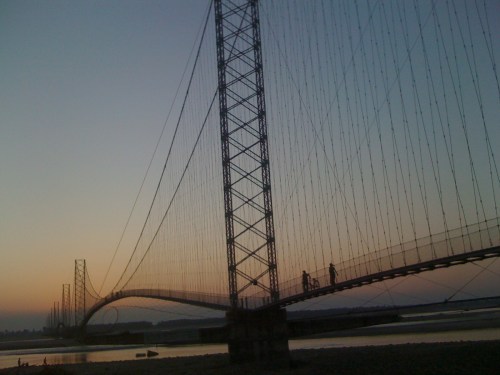
    Chandani Dodhara Bridge on Mahakali River
    The 1453 meters long bridge on Mahakali River that connects Chandani Dodhara villages (of Nepal) on the border with India with rest of the country.

    Chandani & Dodhara villages:

    These two villages of Mahakali pari (beyond Mahakali) were connected to the mainland Nepal only in 2005 when the government built a 1452.96 meters long suspension bridge. The structure is quite a sight.

    The suspension bridge is 12 kilometers away from Mahendranagar town and is connected by a dusty road.


    A bike ride on the Chandani Dodhara suspension bridge over Mahakali river.

    Purba Mechi dekhi paschim Mahakali samma. From Mechi in the East to Mahakali in the West.

    That’s how Nepal is referred to whenever Nepalis talk about the geographical & political boundaries of their country. Beyond these two rivers is not the present day Nepal with the exception of two villages Chandni & Dodhara on the bank of Mahakali.

    Last year I walked on the Mechi Pul (bridge) and crossed over to the Indian side. That was on the day of Maha Ashtami (the 8th day of Dashain festival).

    This year I crossed the Mahakali river, for the first time, and walked into Nepal- again on the day of Maha Ashtami (the day before yesterday).

    The most preferred mode of transportation while crossing the border is a Horse Cart. A ride to Mahendranagar from Banbasa (about 10 kilometers) cost Indian Rs. 60. Additional charges for heavy luggage. This video was taken on the Nepali side of the border soon after we crossed the Seema Surakshya Bal (Indian border security force for the border with Nepal) check post.

    (धेरै…)

  • Dadeldhura: after 12 years

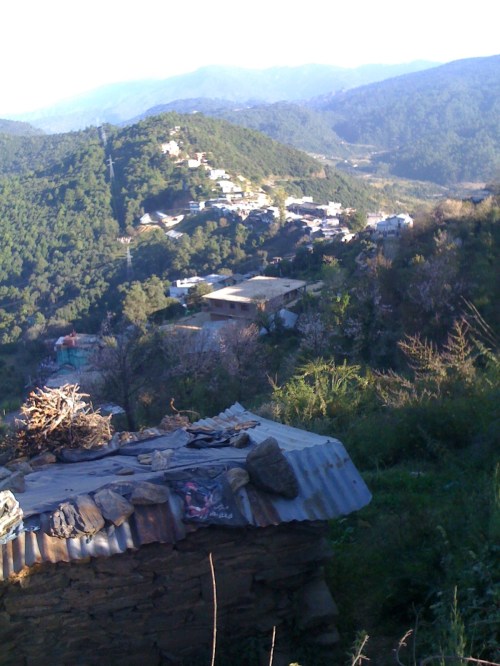
    Dadeldhura hills
    Dadeldhura. Amarghadi hill.

    This Dadeldhura looks more beautiful than the one I had seen in my first visit mote than a decade ago. The sight of dense jungle just below Tuphan Danda together with a glimpse of snow-capped mountain is inviting. And there are so many hills that are experiencing the last rays of the sun for the day as I am typing this. Times have changed. There was no mobile phone network here let alone the GPRS connection (which is frustratingly slow btw). The town, at this time of the day, was dusty as part of the road wasn’t blacktopped.

    There are a few people in bazaar now as the town is in festive mood and peaceful. Many hotels are closed, luckily this one let me in though the guy apologized to tell me that they will not be serving food. The room is nice- attached bath, TV, two beds with large quilts AND great view. I think I’ll stay here tomorrow as well as buses won’t be plying on the day of Tika to take me to my next destination.

  • An Overnight Bus Journey to Mahendranagar from New Delhi


    Bus ride- Delhi to Banbasa (India)/Mahendranagar (Nepal)
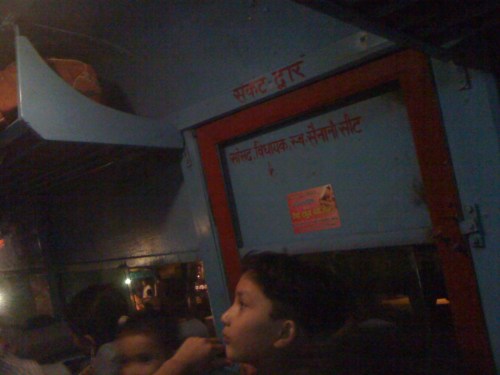
    Seen inside a bus plying between Delhi to Banbasa (Indian town bordering with Nepal's Mahendranagar): "Emergency Exit". Seat for MP, MLA (Member of Legislative Assembly) and Freedom Fighter.

    This is clearly one of the most uncomfortable bus journeys that I have undertaken in recent times. I have to spread my legs to form a huge V so as to avoid rubbing my knees on the back of the seat in front of me.

    The bus is filled with Nepalis who are returning to their homes to celebrate Dashain festival. Some of them told me that they work as security guards in Delhi. That was what I had expected when I asked them about their jobs in the Indian capital.

    Uncomfortable it is but I am happy that I am finally making this trip to Mahendranagar (or is it Bhim Datt Nagar?) from Delhi a reality. I always wanted to travel with these migrant workers, my fellow citizens. This overnight journey that began from Anand Vihar bus terminal in Delhi will end at Banbasa tomorrow morning.

    I am sharing this seat with two young guys from Mahendranagar. One of them says he spent three months in Delhi working at an office. He said he didn’t intend to return without completing his college education.

    Many of my co-passengers were engaged in animated conversations until a while ago. “Ashtami ko din ghar pugine vaiyo” said the boy seated next to me.

    Meanwhile a Nepali folk song is blaring somewhere at the back of the bus.

  • Around the World on a Bicycle: Spreading Message or Loafing Around?

    Saurab Dahal World Cyclist from Nepal (Kantipur)
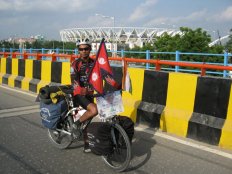
    Saurab Dahal, World Cyclist from Nepal, in New Delhi recently. Jawaharlal Nehru Stadium is on the background

    The ‘world cyclist’ finally arrived in Delhi last week. He had been traveling in India for the past several months. He had added me on Facebook a couple of months back. I had been following his updates on and off. He had posted photos of his meetings with at least two chief ministers, some Bollywood actors and soldiers of Gorkha Rifles, Indian Army. His entries provided insights into his travel experience. One of his status updates said that he had to flee the house in Punjab where he was invited to stay overnight after the male host attempted to kiss him. [एउटा साइकले ठिटो– नेपालीमा ।]

    Saurab Dahal was 14 when he started his world tour on bicycle in 2002. He dropped out of the school (9th grade) to spread awareness on issues like “green environment”, “education to children” and “world peace”. He said he was disheartened by the sight of street kids sniffing glues and begging for food on his way to school in Koteshwar, Kathmandu. “I wanted to do something for them,” he said. “That’s why I decided to leave the school and travel to tell the world about the plight of such kids who are not able to go to school.” After traveling 21 countries including Nepal and India Saurab has mastered the art of convincing people that dropping out of school is the best way to contribute to child education. “I am on a noble mission,” he says. “The people and Nepali embassies must help me [by providing shelter and air tickets]. (धेरै…)

  • एउटा साइकले ठिटो

    Saurab Dahal World Cyclist
    सौरभ दाहाल । विश्व साइकल यात्री । भारतको नयाँ दिल्लीमा । ठुलो पार्न क्लिके हुन्छ

    दिनेश वाग्ले
    वाग्ले स्ट्रिट जर्नल

    ‘बुझ्नुभो दाइ’, उनले फोनमा भने- ‘नेपाली दूतावासले मलाई सहयोग गरेन भनेर मैले ‘हिन्दुस्तान टाइम्स’लाई इन्टभ्र्यु दिएँ ।’

    ‘दूतावासले बडो ठीक गरेछ’, मैले भनेँ- ‘तिमीजस्तो घुमन्तेलाई सिङ्गापुर जान दूतावासले किन प्लेन टिकट किनिदिनुपर्ने ?’

    ‘हैन, एकरात पनि राखेन मलाई’, उनले भने ।

    ‘एकरात पनि राख्न हुँदैन तिमीलाई’, मैले भनेँ- ‘तिमी आफ्नै रहरले साइकल चढेर विश्वयात्रामा निस्केको । फेरि तिमीले नै भन्यौ, तिमीलाई थुप्रैले चन्दा दिएका छन् । बस्न होटलमा आफ्नै पैसा खर्चेर ।’

    ‘नेपालीलाई सहयोग नगर्ने दूतावासको के काम ?’ उनले भने ।

    ‘दिल्लीका बस्तीमा रातभरि लड्ठी ठट्टाउँदै र सिठ्ठी बजाउँदै मजदुरी गर्ने गरिब नेपालीलाई सहयोग गर्नसकेको छैन नेपाल सरकारले’, मैले भनेँ- ‘त्यसैले तिमीलाई दूतावासले सहयोग नगरेकोमा मेरो कुनै सहानुभूति छैन ।’

    ‘तर म त विश्वभरि सन्देश फैलाउन हिँडेको’, उनले भने ।

    आठ वर्षअघि साइकल यात्रा थाल्दा सौरभ दाहाल १४ वर्षका थिए । कोटेश्वर, काठमाडौंको स्कुल जाँदा ‘बाटोमा ग्लु सुँघ्दै माग्ने बच्चा देखेपछि’ विरक्तिएका उनले त्यस्ता बच्चाले स्कुल जानुपर्ने सन्देश दिन साइकलबाट विश्व भ्रमण गर्ने निधो गरे । नौ कक्षाको पढाइ स्कुलमै छाडेर उनले एउटा साइकल समाते र नेपालका विभिन्न जिल्लाको यात्रा थाले । उनले आफ्नो यात्रालाई थप उद्देश्यमूलक तुल्याउन त्यसमा केही बिकाउ सन्देश पनि जोडेका छन्- वातावरण बचाउँ र विश्व शान्ति । नेपाल र भारतसहित २१ देश घुमिसकेका सौरभले मान्छेलाई कसरी प्रभाव पार्नुपर्छ सिकेका छन् । ‘म पत्रिकालाई इन्टभ्र्यु दिँदा खारिइसकेको छु’, उनले मेरा प्रतिकूल प्रश्नहरूमा भने । मैले सोधेको थिएँ- नौ कक्षा पास नगरी स्कुल छाडेको डुलुवाले बच्चालाई स्कुल पठाउनुपर्‍यो भन्नु हास्यास्पद होइन ? पसिना बगाएर काम गर्नु र समाजमा योगदान दिनुको साटो पैसा माग्दै विदेशमा हिँड्दा नेपालका ‘बाटोमा ग्लु सुँघ्दै माग्ने बच्चा’को हित कसरी हुन्छ ? स्कुल जाँदैमा शिक्षा पाइन्छ भन्नु गलत भएको सौरभले बताए । ‘नेपालको शिक्षा प्रणाली गलत छ, धनीले मात्र पढ्न सक्छन्’, उनले भने- ‘यात्रामा मैले स्कुलमा पाउनेभन्दा बढी कुरा सिकेको छु ।’ उनले बितेका केही वर्षमा आफूले जम्मा गरेको सात लाख पैसा नेपालका मध्य र सुदूर पश्चिमका स्कुललाई चन्दा दिएको दाबी गरे । ‘त्यसैले म डुलेको मात्र छैन, सहयोग पनि गरिरहेको छु’, उनले भने । (धेरै…)

  • Beloved Bamboos of Budha Subba in Bijaypur (Dharan)

    A kid and pryaer threads
    A kid plays with prayer threads

    I first visited Dharan in 2001. I was on my way to Kimathanka, the remote and smallest village of Nepal by population bordering China. I stopped for a few days in Biratnagar, booked my air ticket to Tumlingtaar, and went to explore nearby towns of eastern Nepal. Dharan, Itahari and Birtamod. Back then my primary beat in journalism was Information and Technology. (The coverage got me CAN’s “Best IT Journalist Award- Nepali” in 2003.) So I wanted to get sense of the latest IT scene in that part of Nepal. Internet Cafes were recent phenomenon; connection was primitive and expensive. A lot of computer training institutes were sprouting everywhere targeting youths. I made it a point to visit Cyber cafes in all towns and computer institutes. Later, after coming back from Kimathanka with a cover story for Nepal magazine, I did a story on IT scene in eastern Nepal. The story was euphoriant (Title: पूर्वमा आइटीको रन्को) ।

    Apart from checking in to a Cyber Cafe that was divided into several cabins and interviewing a friendly man who ran a Computer institute and a website on Dharan what I fondly remember about that trip is a relatively quick hike to the Bijaypur hill. Budha Subba was waiting for us. The mild mannered and soft spoken young boy who gave me a tour of the famed temple is now a staff reporter (sports) with the newspaper I work for.

    Like many of my generation I had first heard about Budha Subba from one of my text books in school. The old man and his slingshot. The absentee crows and the unique bamboos. Then, not sure if it was mentioned in the text books, came another information about the temple with a romantic angle: lovers thronging in to the Budha Subba temple complex to carve their names on the bamboos nearby. The lovers were “attracted by the legend”, according to a magazine, “that writing the name of your beloved or tying threads blessed at the temple to one of the bamboo plants will bring luck and success to your relationship.” Every now and then the youth magazines like this or some other publications would come up with a story about the declaration of love on the woody stems of the tropical grass that blesses Nepali hills all over. The teen in me had understandably been excited by those stories and other hearsays. When I reached there, on the spot in 2001, I saw innumerable names carved on the bamboos. Coupled names were separated only by the + sign. I admired and took photos of what I saw. (धेरै…)