A day after watching on TV the drama of anti-bill MPs in the Indian parliament disrupting the proceedings by snatching the Women’s Reservation Bill from the house chair and tearing it into pieces on International Women’s Day, I watched a drama, as in a theatre, in an auditorium not very far from Parliament House in Delhi. (More about this here.) In the drama Putaliko Ghar (Doll’s House), director Sunil Pokharel’s Nepali adaptation of Henrik Ibsen’s creation, the protagonist finally discovers herself and walks out of the home stunning her man. A piercing message that women are no more men’s dolls, and that they have to live for themselves rather than for their men, comes out from the drama. (धेरै…)
Latest stories – पछिल्ला टिप्पणीहरू
-
Progressive Society: Nepal vs India
Nepal has already seen/done some of the things that are happening in India today Some arguments here

Click to enlarge Following the latest happenings in Indian politics and society is a kind of déjà vu experience for many Nepali people. The upper house of the Indian parliament last week passed a bill that provides 33 percent reservation for women in the parliament (Lok Sabha) and state assemblies. We already have that in action. The Delhi High Court last year decriminalised gay sex. Our Supreme Court did that at least two years before any court in India acted upon it. And we have at least one openly gay MP in Nepal who appears on the pages of The New York Times and Time. Who in Nepal could believe that an Indian newspaper recently reported the plan of the Delhi Police to hire women in its traffic police department?
Even in fighting, or compromising for that matter, we seem to be ahead of our Indian comrades. They are talking about possible talks between the state and the Maoist rebels. One side is asking for a halt to the violence, the other is demanding an end to the armed operation against them. One side has proposed the names of mediators while the other side has mutely frowned upon that move. The press here is also reporting an alleged rift in the top Maoist leadership. We reported about all these things a long time ago. We have lived through offers of talks, several rounds of talks, their breaking, rifts in the leadership and all. We have been there, done that.
But, seriously, our politics may be in great need of proper management, society seems to have moved progressively ahead perhaps without us being aware about it because of pressing economic and political problems. The credit goes partly to the Maoist movement that aimed at dismantling the feudal structure of society and partly to democracy that opened up Nepali society in 1990. We have waged more fights and gained more in terms of rights and awareness than any other society in the region. (धेरै…)
-
KFC को लाईन

ठुलो पार्न क्लिक गरे हुन्छ । काठमान्डूको दरवारमार्गमा अचेल कुखुराप्रेमीहरुको लाईन देख्न छाडिएको छ। तीन महिना अघि राजधानीका कतिपय मानिहरुमा उत्साह भर्दै खुलेका केन्टकी फ्राइड चिकेन (केफएसी) र पिज्जा हटका कक्षहरुमा अहिले पनि भिड कायमै छ तर, धन्य भगवान, छिर्नैका लागि मानिसहरु आधाघन्टासम्म लाईनमा उभिएको चाहि देख्नु पदैन।
शायद त्यो खुशीको कुरो हो तर त्यो लाईनले त्यहाँ उभीनेहरु भोेका छन् मात्रै भन्दैनथ्यो। उनीहरुका लागि त्यो इज्जतको सवाल थियो। त्यहाँ त्यसरी उभिनु या भित्र गएर चिकेन या पिज्जा खानु उनीहरुका लागि ‘वाह्, हामीले पनि विदेशीकै जस्तो गर्यौं’ भन्नु जस्तै थियो। यहाँ विदेशी भन्नाले अमेरिकी, युरोपेली र अन्य अतिविकशित मुलुक भन्ने बुझ्नु पर्छ। लाईनमा उभिने या अहिले पनि केएफसीमै भिड सिर्जना गर्दै खान चाहने नेपालीले मात्रै त्यस्तो सोच्दैनन्। भारतमा पनि कुरा त्यस्तै हो।
दिल्लीमा केएफसी र पिज्जा हटका थुप्रै रेष्टुरेन्ट छन्। त्यस्तै अर्को बहुराष्ट्रिय अमेरिकी सञ्जाल म्याक्डोनाल्ड्सका हाँगाहरु पनि प्रसस्तै छन्। यी सबै ठाउमा जानेहरु मुख्यत तन्नेरी र युवा व्यवसायी हुन्छन्। ती दुबैबीच एउटा मुख्य समानता हुन्छ- सम्पन्नता । खर्चगर्ने पैसा ’emसँग टन्न हुन्छ र ती खानेठाउँका बर्गर, पिज्जा जस्ता खान्कीको मुल्य अरु पसल या विक्रिस्थलमा भन्दा महगै हुन्छ।
केएफसी र भारतका शहरी तन्नेरीहरुले छोटकरीमा म्याक्डी भन्ने म्याक्डोनल्डस् ख्यातिप्राप्त पश्चिमा चिन्ह हुन् जसले त्यताको सम्पन्नता र विपन्नताको एकैपटक प्रतिनिधित्व गर्छन्। ती संसारभरी फैलिएको अमेरिकी (सामान्यत पश्चिमा) सांस्कृतिक, आर्थिक र राजनीतक प्रभावका प्रमाण हुन्। कोक र पेप्सी पनि त्यही प्रमाणको अर्को पाटो हुन्। लिभाईज र एडिडास पनि त्यस्तै हुन्। तर अमेरिकामै चाहि केएफसी र म्याक्डीको छवि नेपाल र भारतमा भन्दा उल्टो छ। त्यहाँ यी खान्की कम्पनीलाई गरिवहरुका अखडा ठानिन्छ। कम शिक्षित, कम सम्पन्न र कामदार बर्गले मुख्यत तिनका पसलमा गएर सस्ता खानेकुरा खान्छन्। जङ्क भनिने त्यस्ता खानेकुराले थोरैपैसामा पेट टन्न हुन्छ तर स्वास्थ्यलाई उति राम्राे गर्दैन। त्यस’bout सचेत र पैसा हुनेहरुले अमेरिका जस्ता विकशित मुलुकमा तुलनात्मकरुपमा अलि महगो पर्ने तर स्वस्थ जैविक खान्की खान्छन्। हो, बर्गरले आमरुपमा अमेरिकी जीवनशैलीको प्रतिनिधित्व गर्छ तर त्यहा केफसी र म्याक्डीमा जानुलाई ‘वाह्, क्या कुल’कारुपमा लिइदैन। कतिपय मानिसका लागि त्यहा जानु बाध्यता हो किनकी जैविक खानाका लागि उनीहरुसँग पर्याप्त पैसा हुदैन या पकाएर खाने राम्रो व्यवस्था हुदैन। (धेरै…)
-
Delhi is getting hotter


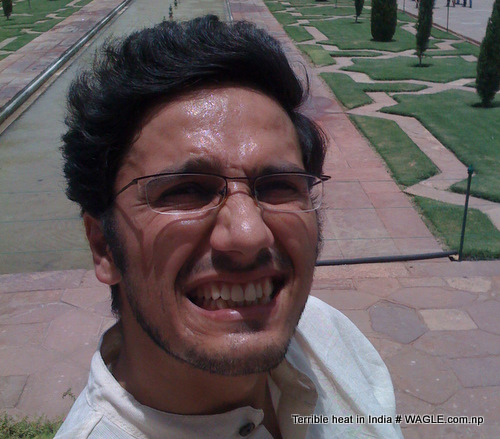
This is in Taj Mahal complex, Agra. Heat is terrible in India. It’s getting hotter in here and it’s not your fault :P. I am not talking about global warming. I have started feeling the heat here in New Delhi as soon as the month of March began. The thought of Delhi in summer makes me sick. It’s like living in a frying pan. The only difference, perhaps, is that when a pan is put on fire the heat comes from only one side: down. In the heat of Delhi you receive heat from all directions. You sweat from head to toe. 37 degrees Celsius, usually the highest temperature in Kathmandu, comes as a great relief from the usual around 43-degrees in Delhi. I am saying this because I have experienced the Delhi heat. I have lived a full summer in Delhi. It’s a dreadful feeling. You have to sleep in a room with AC or fan running all the time. Sickness follows for two reasons: 1) the heat, 2) the frequent switching between the natural heat of the sun and the artificial cold of AC/fan.
Winter in Delhi is way better than the summer. The late February days are like heaven. The spring is the time when trees change their ‘clothes’ leaving roads beneath them beautifully covered by the colorful leaves. The cool breeze hits you as you move out. The best moments in Delhi are so short-lived. I can still experience this in the early hours of the day in some of the parks in Jangpura. But I can feel the moment is quickly fading towards the past. What awaits me is the sweating heat. Phew. The curfew. (धेरै…)
-
Facebook आन्दोलन
(यो लेखमा उल्लेखित तथा अन्य रुचिपूर्ण नेपाली फेसबुक समूहरुको सूची र ठेगाना यहाँ छ- http://wp.me/pjyem-Dw)

ठुलो पार्न क्लिक गरे हुन्छ । ‘सक्छौ भने नयाँ सम्बिधान बनाऊ, हैन भने नाटक नदेखाऊ।’
विशेषतः सभासदहरुप्रति र सामान्यतः राजनीतिक नेतृत्वप्रति लक्षित त्यो बोलीसँग जुनै नेपालीले पनि ‘त्यै त’ भन्दै सहमतिमा टाउको हल्लाउछ। सामाजिक सञ्जाल साईट (साससा) फेसबुकमा त्यसलाई ५ सय १६ जनाले समर्थन गरेका छन्। उनीहरुले संविधान लेख्न साटो स्वार्थी बनेको राजनीतिक नेतृत्वप्रति आक्रोष पोखेका छन्।
वितेका केही बर्षहरुमा इन्टरनेटका नेपाली प्रयोगकर्ताहरुको संख्या ह्वात्तै बढेको छ जो इमेल या सस्तोमा विदेश फोन गर्नमा मात्र सीमित छैन। वेब २.० भनिने ब्लग, फेसुबक र ट्वीट्टर जस्ता सघन अर्न्तक्रियात्मक साईटहरुमा बढ्दो नेपाली सहभागीतासँगै त्यहाँ नेपालीहरुका अनेकौ भावना र चाहना अभिव्यक्त हुन थालेका छन्। साच्चै, त्यस्तो अभिव्यक्तीका लागि सार्वजनिक मन्च नेपालीहरुलाई इतिहासमै कहिल्यै मिलेको थिएन। इन्टरनेटले विश्वलाई खुम्च्याउनुका साथै पहाडको फेदीमा बस्ने नेपालीलाई समतलको किनारमा बस्ने नेपालीसँग जोडाएको छ। इन्टरनेट नहुँदो हो त तिनले जिन्दगीमै कहिल्यै भेट्ने थिएनन्। आज ती फेसबकुमा एउटै अभियानमा सामेल छन् या फरक लक्ष्यका लागि विवाद गरिरहेका छन्। (धेरै…)
-
Interesting Nepal related Facebook groups


You might want to go through this article titled “Facebook आन्दोलन” in today’s Kantipur for reference. And please, enter your email in the box on the right so that I can send you my future posts in your inbox.
Facebook is becoming one of the most popular web sites in Nepal. Many Nepalis are using it. This entry, a supplement to an article that I have written on today’s Kantipur, is about interesting groups that are created by Nepali people or are related Nepal.
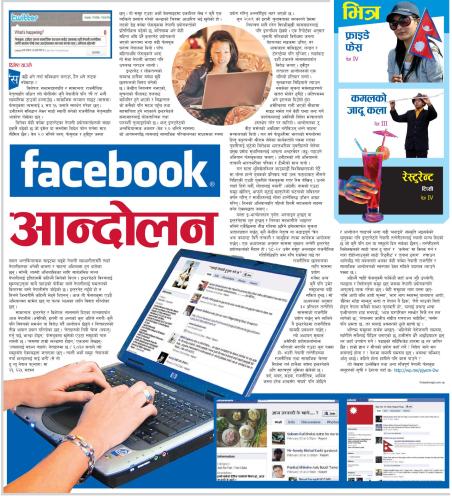
Click to enlarge (ठुलो पार्न तस्बिरमा क्लिके हुन्छ ) The global popularity of Facebook is suitably reflected in Nepali people’s usage of the social networking site. As it is with users around the world, majority of Nepali Facebookers are youngsters, young professionals and a lot of journalists based primarily based in Kathmandu (and other cities AND at least one in Jumla!). Over the past couple of years I have done a couple of stories about Facebook (and many more mentioning it). Every time a story is published, I receive comments from people who either didn’t know about the site but came to know about it from the story or just joined after reading the story. Actually same thing happens with any other story. Once I was very much into doing stories about Gmail when the service was recently launched or was getting popular in Nepal. Some of my colleagues in the newsroom still think my devotion to Gmail played some role in popularizing it. (धेरै…)
-
Happy Holi India! (and JNU Chaat Festival)
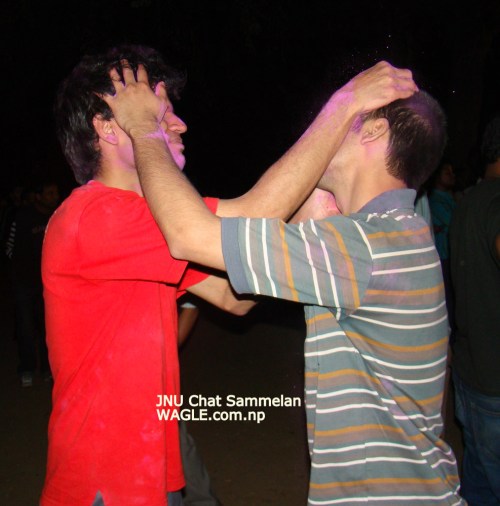
Riot of Colors: Ishwari (l) and Gokul attack each other (click on pic for more info and photos) Every year the hilly Nepal and Kathmandu Valley celebrate Holi (Fagu Purnima) a day before the rest of the country and India do the same. This year it was Holi-Day in Kathmandu and Holi-Eve in India when these photos were taken in Jawaharlal Nehru University, Delhi on 28 Feb. There’s a tradition in JNU that requires students to organize a program called Chaat Sammelan (चाट सम्मेलन, chat conference, literally) on the eve of Holi with a lot of fanfare. The program involves a brightly lit stage, horse, asses, speakers dressed in fancy outfits, an energetic crowd, a great amount of sense of humor and infinite energy to laugh. Students come out on the streets to join a noisy procession that originates from Tapti Hostel at 9 pm. Led by a man, apparently the president of chaat sammelan, holding a briefcase with “Chaat Budget 2010” written on it, who is seated on the horseback, the procession stops by a couple of other hostels before finally halting at a ground where an enthusiastic crowd is waiting them in front of a stage.
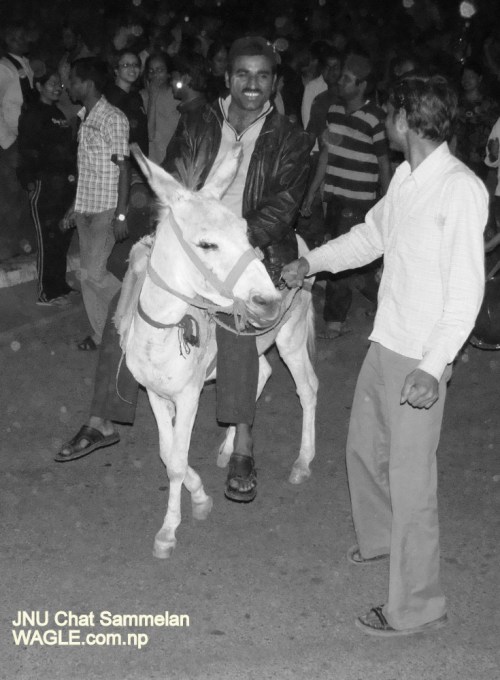
एउटा गधा माथि अर्को…मान्छे । The speakers go to the microphone and try to entertain the crowd with humorous and sarcastic speeches. That’s a very challenging job. The members of the audience start booing and hooting as soon as they sense that the speaker is faltering. Then the speaker has to either leave the microphone volunteer or a group of volunteers remove him. They either carry him back to his seat or throw him to the crowd. I didn’t remain on the venue until the program ended but I was told that the one who remains on the stage for the longest period is declared the chaat samrat (चाट सम्राट, chat emperor).
Next day is the day of colors in the University as it is with many parts of India. No lunch is served at the hostel mess on Holi-Day. The breakfast is served with unlimited glasses of bhang (भाङ). Last year I brought a 2-litter Sprite bottle-ful of Bhang from the mess to my home hoping to finish that in a day or two. In reality, I couldn’t touch the bottle for several days. A friend comes at my apartment and he is horrified to see the bottle. “This thing is about to burst,” said he and cautiously opened the lid. Then I realized why Uncle Mehra, my landlord, had told me a few days ago that he had never seen a Sprite bottle of that size. The bottle had swollen almost to the breaking point. I had Uncle Mehra saying that that was a 2-litter bottle and perhaps they don’t sell that in Jangpura.

चाट भाइ चाट: A speaker tries his luck. Before he impressed the audience, he was thrown out of the stage. Apart from the consumption of bhang in large quantity, Holi in India is celebrated like we do in Nepal. Bollywood has popularized and energized the festival in India with variety of songs but on the negative side the culture- of hitting passers by with lola (water-filled balloons)- is also becoming a part of celebrations. I could see boys throwing lolas at girls and other passersby days before the Holi-day. Holi-ganism has threatened to take good part of the festival away in Nepal. I could sense same is happening in India, at least in Delhi. About five hundred Holi-gans were arrested in Kathmandu. On Holi-day I went around Delhi to see how were celebrating the festival. What I saw was not entirely different from what I have seen in Kathmandu. Roads were almost empty which is a rare in Delhi. The only days when I see a thin traffic on Delhi roads are on India’s Independence Day and Republic Day. It was so easy and fun to drive around in Delhi on Holi-day. Policemen were deployed all over the city in large numbers to control possible holi-ganism. But the thick police presence made me feel that India was voting or doing something very important. I don’t recall seeing policemen on a small roundabout near my house in the past year but on the Holi-day this year I saw some policemen standing by. (Last year on Holi-day, I spent most of my time in JNU and didn’t go around the city.)
Here are more photos: (धेरै…)
-
Street Food of Delhi (and India)

Pani Puri or Golgappa. Probably the most famous food in India? The urban Indian streets are full of two things: people and food. Men and women of all ages and sizes standing around a small roadside food stall and eating is a common sight everywhere. Every market, big or small, upscale or otherwise, has several street food stalls. The trend is slowly growing in Kathmandu valley over the past few years (re: stalls selling momo, chatamari, bara etc. in New Road, Khicha Pokhari, New Baneshwor etc.) while the same is not new in Tarai parts of Nepal. In India, its the number that is intimidating. Perhaps that’s all understandable. It’s a country of more than a billion people. The street food culture is very much mainstream here. In these photos taken by my iPhone, one street food that is popular in several Indian cities including Delhi and Calcutta but is not considered really THE Indian, is missing. No prizes for guessing. That will be featured in a separate entry soon.

That yellow noodle-like thing was new to me. And also the way they served..in a plate. -
आयो गुगल बज्

ठुलो पार्न क्लिक गरे हुन्छ । माइस्पेस, फेसबुक या ट्वीट्टर जस्ता सामाजिक सञ्जालका सदश्य बन्न सबैभन्दा पहिला तिनमा आफ्नो इमेल ठेगाना दर्ता गराउनुपर्छ जो ती वेबसाईट प्रयोग गर्ने सबैलाई थाहा भएकै कुरा हो। ‘गुगल बज्’ले चाहि सामाजिक सञ्जाललाई नै इन्बक्स भित्र ल्याईदियो। कम्तिमा जीमेल प्रयोगकर्ताहरुका लागि। फेब्रुअरी नौ यता जीमेल प्रयोग गर्नेहरुले पहिलो साइन(इनमा गुगल बज’bout सूचना देखे जसलाई स्विकार्नेवित्तिकै फेसबुक र ट्वीट्टरमा मिलिरहेका र थप सुविधा सहितको सामाजिक सञ्जाल साईट ’emको इन्बक्समै आयो।
एउटा उपयोगी व्यक्तिले अचानक घरैभित्रै आएर हेल्लो भन्दा तपाई जति चकित, उत्तेजित र केही रिसाएको जस्तो बनेजस्तै भए गुगल बज्को आगमनबाट जीमेल प्रयोग कर्ताहरु। चकित किनकी त्यस’bout गुगलले त्यसअघि खासै केही कुरै गरेको थिएन । उत्तेजित किनकी कुनै झन्झटविनै निकै सुविधाहरु भएको सेवा इन्बक्समै हाजिर थियो। अनि रिसाएको चाहि किन भने उपयोगी नै सही तर कुनै बाहिरिया मान्छे थाहै नदिइ अचानक घरभित्र छिर्दा उसले तपाईलाई अन्तरंग अवस्थामा फेला पार्छ। अर्को शब्दमा भन्दा तपाईको गोपनीयतामा केही आँच पुग्छ। उदाहरणका लागि, घरमा कोही हाफ पाइन्ट लगाएर बसेको हुन्छ, कोही झगडा गर्दै हुन्छ, कोही गोप्य छलफल गर्दैहुन्छ। (धेरै…)
-
The Highway Kids #Nepal
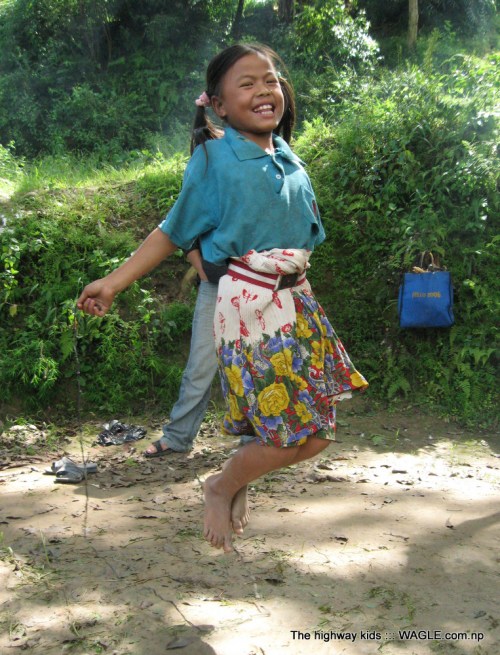
j. u. m. p. !! It was one of those exploration trips around Kathmandu valley that Suraj Kunwar and I took in late 2008. Tired of our newsroom routine, we had decided to escape out of it and venture into rural Nepal that wasn’t very far from the capital city. [This is exactly the kind of traveling I miss in Delhi. There are no hills around.] On that particular day, we had left the city thinking about Kavre and its famous village Rabi Opi. A few weeks before, I had gone to a village in Kavre, on the opposite side of Rabi Opi, to cover a visit by a British minister for international development. The greenery and agricultural atmosphere had remained in my heart. Suraj, his Honda Shine and I reached Dhulikhel for a stoppage at a popular roadside coffee joint. The place served fresh coffee produced locally. From there, along with some additional cups of lassi, we looked down to survey the trail that separated from the Araniko Highway and went spiraling upward through small hills. They looked small. Near the coffee shop, we spotted a group of kids who were playing skipping game while their parents, the Tamangs of the village, were organizing a small puja ceremony to please the rain goddess if I remember it correctly. We spent an hour or so there, watching the ceremony, photographing the kids and cracking jokes with them.
We climbed down to the valley where farmers were busy in their rice fields. Some were weeding while others were looking after their buffaloes. One woman was bathing her buffaloes. Some men and women in a nearby Kharelthok village were drinking tea. We asked for milk at the shop. Unfortunately, that was not available at that time of the day. They sell the milk to dairy production companies early in the morning. Suraj and his bike were finding it tough to negotiate their way through the slippery road that went through fields. The unpaved trail was bumpy. At some points, water flowed through it. The potholes made traveling on it particularly risky. Soon we became the victims. Suraj and his Shine lost the balance. We all fell into the watery three feet down. No one was hurt in the process. A man from afar had seen the event live. He came to our rescue.

He is completely in charge of the affair 
He was swimming in the stream down there. We climbed up to Rabi Opi village, stopped at tea shop and then continued climbing upward, towards Banepa. From there, as per the original plan, we should have headed back to Kathmandu. The plan got changed. Instead, we decided to go to Nepalthok, a famous town some 55 kilometers away. It was getting duskier but that didn’t stop us from traveling. Suraj had already done a trip on the BP Highway (Banepa-Bardibas) long time ago with Devendra Bhattarai and he was full of praise for the road. He fondly recalled that trip as he drove. On my part, I always wanted to travel that road as I hadn’t done that before. We reached Nepalthok at around 8:30 pm. There were no lodges there but a hotelier who primarily sold food to load carriers, bus drivers and other travelers agreed to provide us beds for the night. When we went upstairs, we saw beds neatly arranged on the floor.
[Here’s a part of what I wrote in an article for that week’s Koseli:
कोठामा छिर्नेवित्तिकै मलाई न्यूयोर्क टाइम्सको फेसनप्रधान परिशिष्ट स्टाइल म्यागेजिनको पन्ना पल्टाएजस्तो लागेको थियो ।
कोठा के, घरको पुरै दोस्रो तल्ला थियो त्यो जसको दाईने कुनामा खोस्टा थुप्रिएका थिए, देब्रेमा भकारी। बाँकी दुई कुनामा दुई डबल भुई–बिच्छ्यौना पल्टेका थिए। र, दाइनेपट्टीको ओछ्यानमा ऊ लमतन्न पल्टेको थियो अन्डरवेयरको सानदार विज्ञापन गर्दै। ढोकैमा उभिएको र हावासँग संघर्ष गरिरहेको धिपधिपे मैनको उज्यालोमा कट्टुको ब्रान्ड ठम्याउन माइनस वान प्वाईन्ट टु फाइभको चस्मा लगाउने मेरा आखालाई अप्ठेरो हुनु स्वभाविकै थियो। केही क्षणकै लागि सही मैले विश्वास गर्न चाहे ऊ केल्भिन क्लाईनको स्तरीय उत्पादन लगाइरहेको एउटा मोडल हो जो स्टाइल या त्यस्तै कुनै उत्कृष्ट म्यागेजिनमा छापिने विज्ञापनमा प्रयोग हुने फोटो खिचाउन कुनै एउटा डिजाइनर सेटमा उत्तानो परेर सुतिरहेको छ। थप पढ्न यहाँ कि्लक गरे हुन्छ ।]
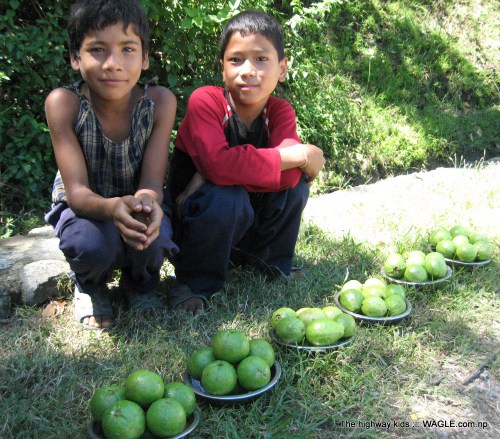
Any takers here? Rs. 5 per plate. In the morning next day we went to the dovan, the confluence of two famed rivers- Roshi Khola and Sunkoshi. From there, Roshi becomes Sunkoshi. That is also the bordering point for three districts: Kavre, Sindhuli and Ramechhap. There’s a Shiva temple a little down from the dovan, on the bank of Sunkoshi. We went there navigating the maze of sand, water, rice filed and bushes. Lord Shiv had become very kind to us. There was no one except a sage making us feel the God solely belonged to us. We could see fishermen on the other side of Sunkoshi trying out their luck with the swollen river.

All eyes are focused at the same point, perhaps? The photographic focus of this entry are the kids we met on the roadside during our two-day journey. Their faces represent Nepal for what it truly is: a genuinely multi-ethnic and multicultural society that, at the end of the day, speaks the same language of humanity and of course Nepali. One may easily see the stamps of poverty in their eyes and cheeks but that doesn’t stop them from smiling. Some of them have already experienced a lot that only an adult is supposed to experience in some advanced societies but for them the life goes on. For them it is a beautiful blessing.
Related blogs (from my Helambu trip with Suraj):
1. Time For Kids Go Back To School (After Dashain Holiday)
4. Tharepati Downward: Pleasant Walk [Helambu Trek Day 5 of 6]
And another exploration from around Kathmandu Valley
6. The Motorcycle Diary: Nepali Version!
7. Walking Around a Nepali Village
Here are more photos from the Kavre-Rabi Opi-Dhulikhel-Nepalthok trip! (धेरै…)